What should you take with you?
You should have the following ready:
- Your passport
- Your Spanish visa, where applicable
- Your completed Declaration of Entry form – if you are an Upsticks client, we will prepare this and email the documents to you before you travel
- Evidence showing the date you entered Spain
- Evidence of your journey through France and into Spain
As you travel, keep your toll receipts, petrol receipts, hotel bookings, ferry or Eurotunnel documentation and any other dated evidence of your journey.
These documents can help establish where you were travelling and, importantly, the date on which you entered Spanish territory.
If you’re travelling as a couple or family, make sure you have the relevant documentation for each person.
Don’t leave it too long
This is something to deal with as soon as possible after entering Spain.
The rules governing the Declaración de Entrada are set out in Article 13 of Real Decreto 1155/2024, Spain’s current Reglamento de Extranjería.
The regulation provides for declarations of entry by certain third-country nationals entering Spain from a country with which border controls have been abolished. Where the declaration is required and was not made at the time of entry, Article 13 states that it must be made within three days of entering Spain, at any Cuerpo Nacional de Policía station (National Police).
For people moving to Spain with a residence visa, there is an additional practical reason to make sure your date of entry can be properly evidenced.
The Ministry of the Interior’s guidance on applying for an initial TIE asks for a passport or travel document showing the entry stamp or, where there is no entry stamp, a valid passport or travel document together with a Declaration of Entry.
So if you drive into Spain from France without receiving a Spanish entry stamp, your DDE can provide official evidence of when you arrived in Spain for your subsequent residency formalities.
Our advice? Don’t wait until the end of your journey to think about it.
If Teruel works with your route, build the stop into your journey before you leave the UK. Keep your travel evidence as you make your way through France and into Spain, get the DDE sorted in Teruel, and then carry on to your new home knowing that one more job has already been ticked off the list.
What if you’re taking a different route?
If you’re entering Spain on the western side of the Pyrenees, we also know that clients have successfully obtained their DDE at the National Police in Irún, shortly after crossing the French-Spanish border.
And if you travel into Spain through Andorra, the position is different. Andorra is outside the Schengen Area, so you pass through an external Schengen border when entering Spain and can ask the Spanish border authorities to stamp your passport.
The important thing is to plan how you are going to evidence your entry into Spain before you start your journey, rather than trying to piece the evidence together afterwards.
Upsticks Tips
Keep a small travel file with you in the car containing your passports, visas, DDE forms and evidence of your journey.
And don’t throw away those boring-looking toll and petrol receipts. Keep them together with your ferry or Eurotunnel documents, hotel bookings and other dated travel evidence until your Spanish residency formalities are complete.
For once, the random bits of paper accumulating in your glovebox may actually be useful!
A big thank you to our clients
A special thank you to our clients Jackie and Jason for sharing their experience of getting their Declaration of Entry in Teruel and helping us pass this useful information on to other Upsticks clients making the journey to Spain.
Jackie and Jason also shared this handy tip for anyone planning to stop in Teruel:
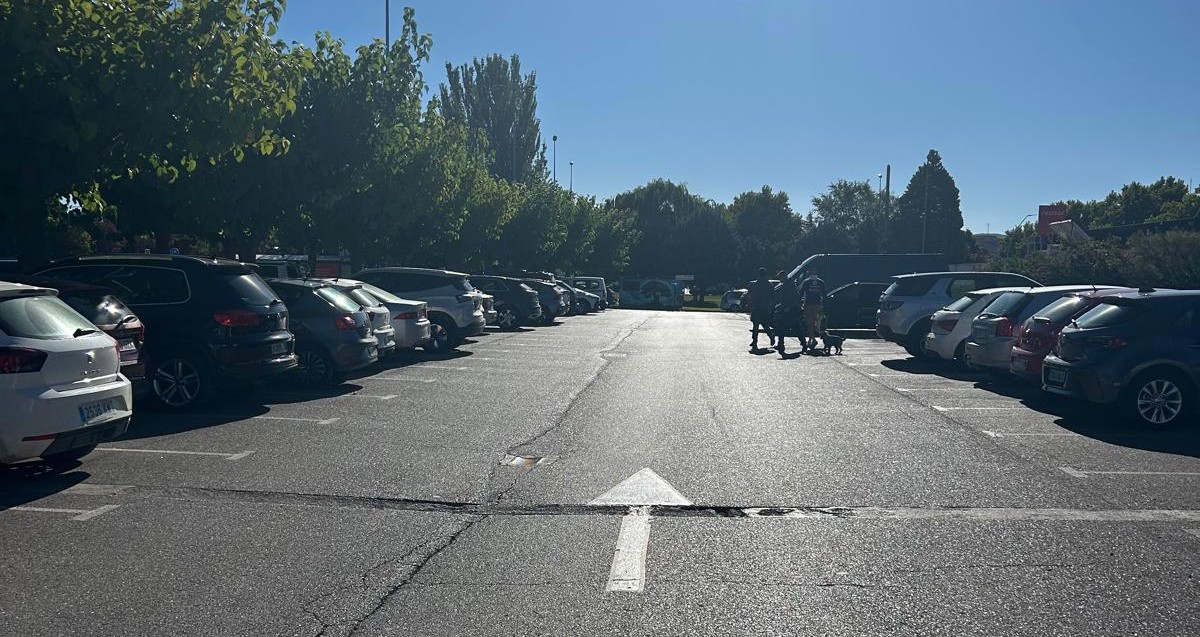
“Great parking, 20 min walk to very helpful police station, 1 straight road. Thanks again Chris 🙂”
Thank you, Jackie and Jason — feedback like this is incredibly useful and helps us make the journey that little bit easier for the next Upsticks clients heading to Spain.
Need help with your move to Spain?
If you’re considering moving to Spain on a Non-Lucrative Visa, or you’re already working with Upsticks on your move, we’ll help you understand what you need to do before and after you arrive.
From preparing your visa application to getting your TIE once you’re here, our aim is to make the process as straightforward and stress-free as possible.
Safe travels — and welcome to Spain!
The information in this article was current at the date of publication. Spanish immigration rules and procedures at individual police stations can change, so we recommend checking the arrangements before travelling.